Before the Feed
Fertility, incubation problems and knowing when we need to step in
By Yolandi van den Berg | Blissful Wings
When we talk about handrearing a baby parrot, our minds naturally go straight to feeding.
Which formula? How much? How often?
But long before we ever prepare that first feed, a whole story has already started.
It starts with an egg.
For that little chick to eventually end up in our hands, so many things have to happen first. The egg needs to be fertile, the embryo needs to develop, incubation needs to be consistent, and then the chick still has to make it through the hatch.
When everything goes well, we don’t really think about all of those steps. But when something goes wrong, we suddenly realise just how much can happen before we ever get to the feeding stage.
This is where we, as aviculturists, sometimes have to make a difficult decision: When do we allow nature to take its course, and when does nature need a little help from us?
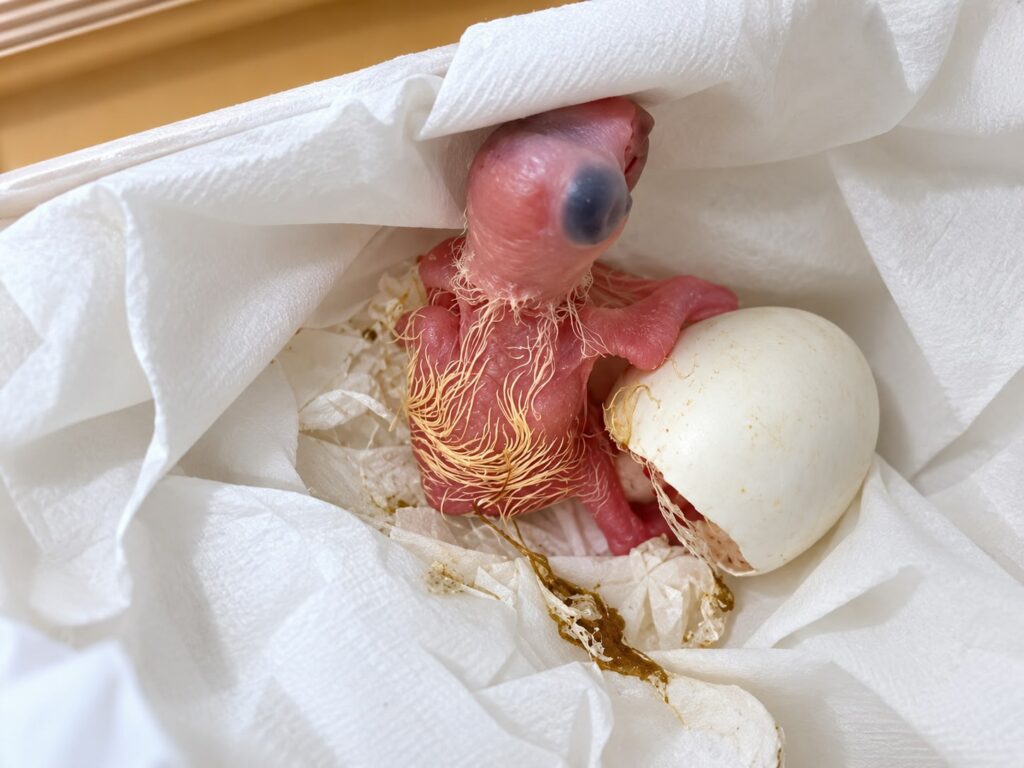
An egg doesn’t always mean a chick
We often look at an egg as either fertile or infertile. But it isn’t always that simple. An egg can be fertile, development can begin, and the embryo can still stop developing very early.
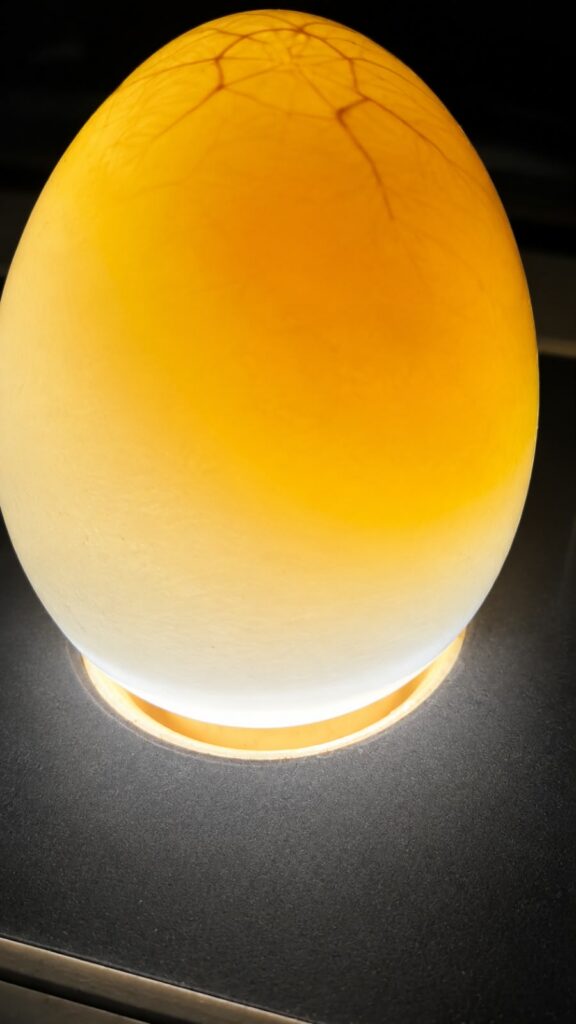
Sometimes it happens so early that, when we candle the egg, it looks completely clear. We then assume, “It was never fertile.” But that isn’t necessarily what happened. The embryo may have started developing and then stopped.
This is why I think it is so important to understand that fertility and embryo survival are two different things. You can have a pair producing fertile eggs and still have disappointing hatch results.
Why don’t all fertile eggs hatch?
There isn’t always one simple answer. It could have something to do with the pair, the egg itself, incubation, contamination, the embryo or even something we simply haven’t identified.
Things we may see include:
- Problems with mating or fertility
- Young or inexperienced breeding pairs
- Contamination of the egg
- Long periods without incubation
- Incorrect incubation conditions
- Too much or too little moisture loss
- Problems with turning or positioning
- Developmental abnormalities
- Poor shell quality
- Damage to the egg
- Problems during the final stages of hatching
Sometimes, after checking everything we can think of, there is still no obvious reason. The embryo simply doesn’t make it.
That’s one of the difficult parts of breeding. We don’t always get an explanation for every loss. Parrots don’t always read the same book we do. And sometimes they certainly don’t follow the plan we had in our heads!
Knowing your pairs matters
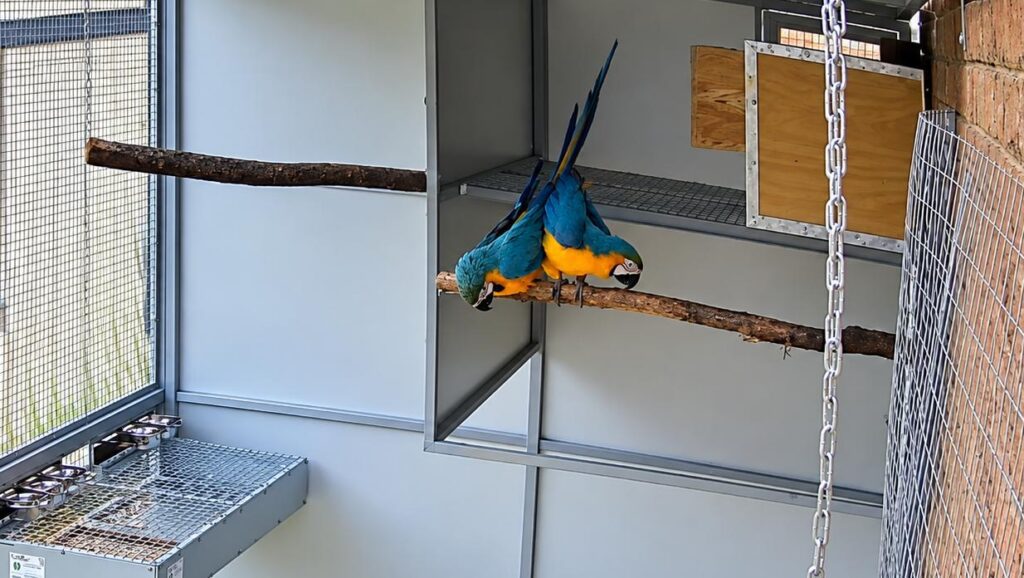
Something I have found particularly interesting over the years is how differently individual pairs can behave.
Some hens start sitting properly almost immediately. Others may lay an egg and only sit for a few hours, or perhaps for a day, before getting up again and returning to the male.
What many people don’t realise is that development can already have started during those first periods of warmth. If the egg then cools for a prolonged period, that developing embryo may not survive. Later, when we candle the egg, we might see nothing and simply think, “It’s clear. It was never fertile.”
But it may have been. This is why I believe knowing your pairs is so important.
Watch them. Know when your hen normally starts sitting. Know how she behaves after laying. Notice when something is different.
Over time, you start learning the little things about each pair. And sometimes the behaviour of the parents can tell you something about an egg that the egg itself can’t.
So when do we take an egg?
This is where things become a little more complicated. There isn’t one rule that works for every pair, every species or every situation.
Sometimes the decision is obvious. The parents are breaking their eggs. They are abandoning them. They are not incubating consistently. Another bird is interfering with the nest. Or perhaps the parents simply aren’t managing the clutch properly.
In those situations, artificial incubation may give that egg a chance it otherwise wouldn’t have.
But there are other situations where the decision isn’t quite so straightforward.
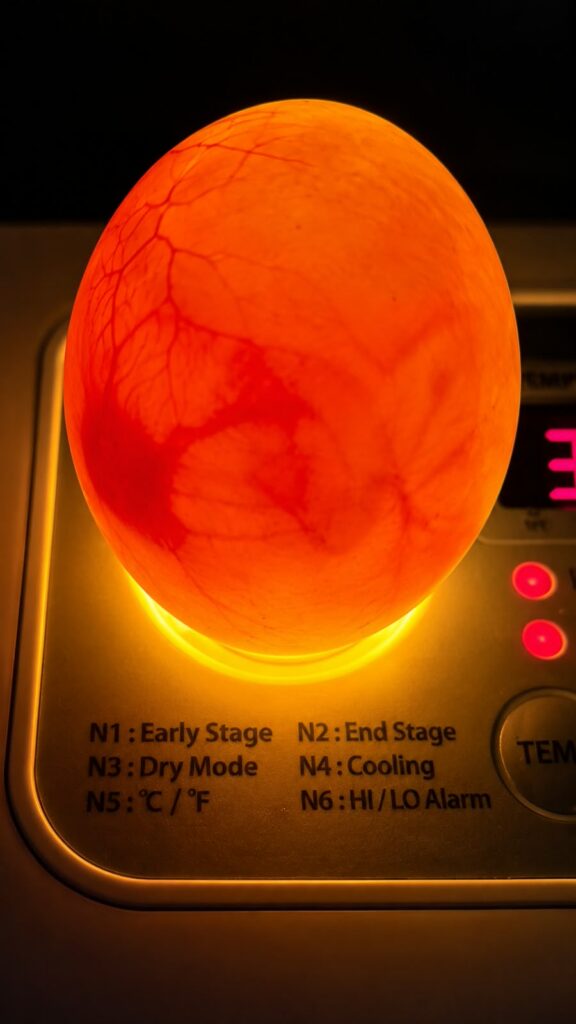

Rare species and valuable breeding opportunities
When we work with rare species, every successful breeding opportunity can be extremely important. Some pairs may only produce a small number of eggs in a season. Losing one can therefore have a much bigger impact on a breeding programme.
Artificial incubation can sometimes allow us to protect an egg or monitor its development more closely. It may also be considered as part of managing a breeding programme.
But I don’t believe that simply because a species is rare, we should automatically interfere. The birds still come first. Their health and welfare have to remain more important than how many chicks we can produce. That is something I remind myself of often.
Because breeding can very easily become about numbers.
How many eggs? How many chicks? How many pairs? How many babies this season?
But behind every number is a living bird, and that bird has to come first.
And then there is the second clutch
Artificial incubation may also be considered when a breeder is trying to obtain a second clutch in the same breeding season.
Removing eggs can sometimes encourage a pair to lay again sooner. But this is something I believe needs to be approached very carefully.
Just because we can get another clutch doesn’t necessarily mean that we should. Every clutch takes something from the hen. Nutrients are used. Calcium is used. Her body has to work hard to produce those eggs.
Repeated laying can place considerable strain on her. Before trying for another clutch, we need to look at the individual bird.
Is she in good condition? How did she cope with the previous clutch? Has she had reproductive problems before? Is she maintaining her weight and condition? And most importantly, is another clutch really in her best interest?
Artificial incubation can help us manage a breeding programme, but it doesn’t remove the biological cost of producing another clutch. That part still belongs to the hen.
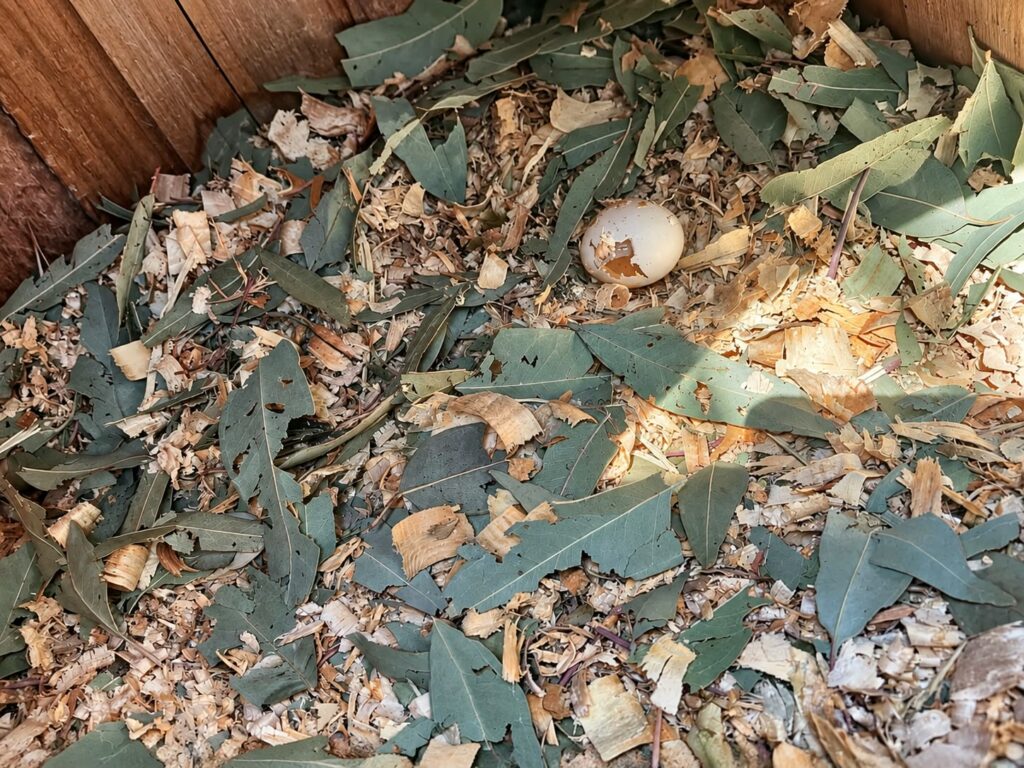
Before taking that egg…
I like to keep things practical. Before removing an egg from the nest, these are some of the questions I would ask myself:
Why am I taking this egg?
- Has it been abandoned?
- Are the parents breaking or damaging their eggs?
- Is incubation inconsistent?
- Is the egg genuinely at risk?
How are the parents doing?
- Are both birds healthy?
- Is the hen maintaining her condition?
- Has she had problems with previous clutches?
- Could removing the eggs encourage her to lay again and put more pressure on her?
What do I actually know about the egg?
- When was it laid?
- When did incubation start?
- Has it already been incubated?
- Have I candled it?
- Is there evidence that development has started?
- Have I been weighing it and keeping records?
And then there is the biggest question of all: Is removing this egg really in the best interest of the birds?
Because that is where my decision should always end.
Artificial incubation is a tool
I am a firm believer that parent-reared chicks have an important place in aviculture. Parents are naturally equipped to incubate their eggs, hatch their babies and raise them. Artificial incubation isn’t automatically better.
Sometimes, though, nature doesn’t give us the outcome we hoped for.
An egg may be abandoned. A pair may repeatedly damage their eggs. A rare species may produce an egg that we cannot afford to lose unnecessarily. We may be managing a breeding programme where a second clutch is being considered. Or something may simply have gone wrong.
That is where our experience and knowledge can make a difference.
The goal isn’t to interfere with everything. The goal is to learn when we need to step in and when we need to step back.
And honestly, I think knowing when not to interfere is just as important as knowing when to do something.
Before the feed
By the time we are standing there with a syringe in our hand, the chick already has a history. A history that started long before we ever touched it.
Did the embryo develop normally? Was incubation consistent? Was the egg exposed to long periods of cooling? What happened during the days before the hatch? Did the chick hatch on its own? Did it struggle? Did it need assistance? Was the yolk absorbed properly? Did something happen during incubation that may affect the baby now?
All of these things can tell us something about the chick that is now in our hands. And this is something I have come to appreciate more and more with experience: the chick doesn’t suddenly become a problem when it reaches the brooder. Sometimes the story started days or even weeks before.
A difficult hatch, a slow start, poor absorption, weakness or problems with feeding may have a connection to what happened before the chick ever took its first breath outside the shell.
The more we understand what happened before the hatch, the better equipped we are to understand the baby once it is in our hands.
Because handrearing doesn’t really start with the first feed.
It starts long before that.
It starts with the egg.
Next article: The Egg Is Talking — Are You Listening?
In the next article, we’ll look more closely at the egg itself and what it can tell us while it is developing.
Because sometimes the most useful information isn’t the number we see on the incubator display. Sometimes, the egg is telling us exactly what is happening.
We just need to learn how to read it.
Yolandi van den Berg
Blissful Wings