

Historic First: Lutino Pink-Necked Green Pigeon Successfully Bred in Captivity at The Dodo Park
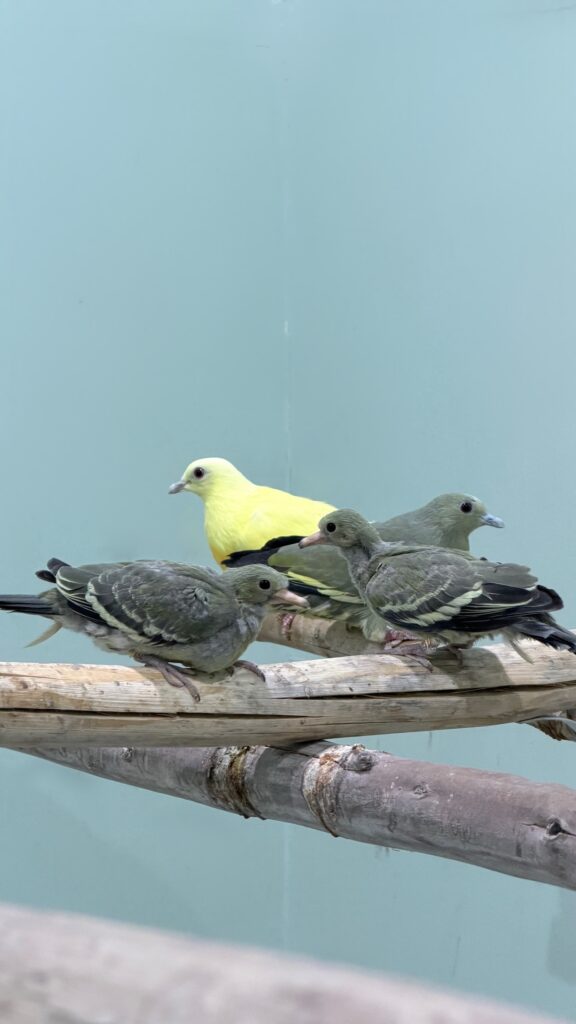
The historic Lutino Pink-necked Green Pigeon male with the first successfully captive-bred offspring at The Dodo Park, Doha, Qatar.
In the world of specialized aviculture, some milestones do more than just fill breeding logs — they rewrite what we know about avian genetics and captive husbandry. Recently, a historic breakthrough was officially documented in Doha, Qatar: the first successful captive reproduction of the ultra-rare Lutino (pure yellow) mutation of the Pink-necked Green Pigeon (Treron vernans).
This breeding triumph took place at the advanced breeding facilities of The Dodo Park, a world-class private avian research and sanctuary project envisioned, fully funded, and owned by the Qatari naturalist and independent researcher, Nasser Bin Mohamed Al-Jbr. Currently in its advanced construction phase, the park is already proving its scientific capabilities and establishing itself as a premier hub for high-end aviculture and conservation genetics.
THE MAGIC OF THE LUTINO MUTATION
The Pink-necked Green Pigeon (Treron vernans) is native to the lush canopy forests of Southeast Asia. In its wild-type form, it is celebrated as one of the most sexually dimorphic and colourful columbids in the world — males sport a stunning combination of a pinkish-purple neck, orange breast, and olive-green wings, while females exhibit a beautiful, uniform olive-green plumage that provides perfect camouflage.
The Lutino mutation, however, represents an entirely different level of rarity. This genetic anomaly completely halts the production of melanin (dark pigments) while leaving carotenoid pigments intact. The result is a breathtaking, pure canary-yellow bird with striking orange-pink breast highlights and dark eyes.
In the wild, the survival rate of a Lutino Pink-necked Green Pigeon is virtually zero. Lacking their natural green camouflage, these bright yellow birds are immediate targets for predators. Consequently, establishing and stabilizing this mutation in captivity represents a monumental challenge, demanding absolute precision in environmental controls, dietary management (as frugivorous pigeons have highly specialized nutritional requirements), and pairing strategies.
THE BREEDING SUCCESS AT THE DODO PARK
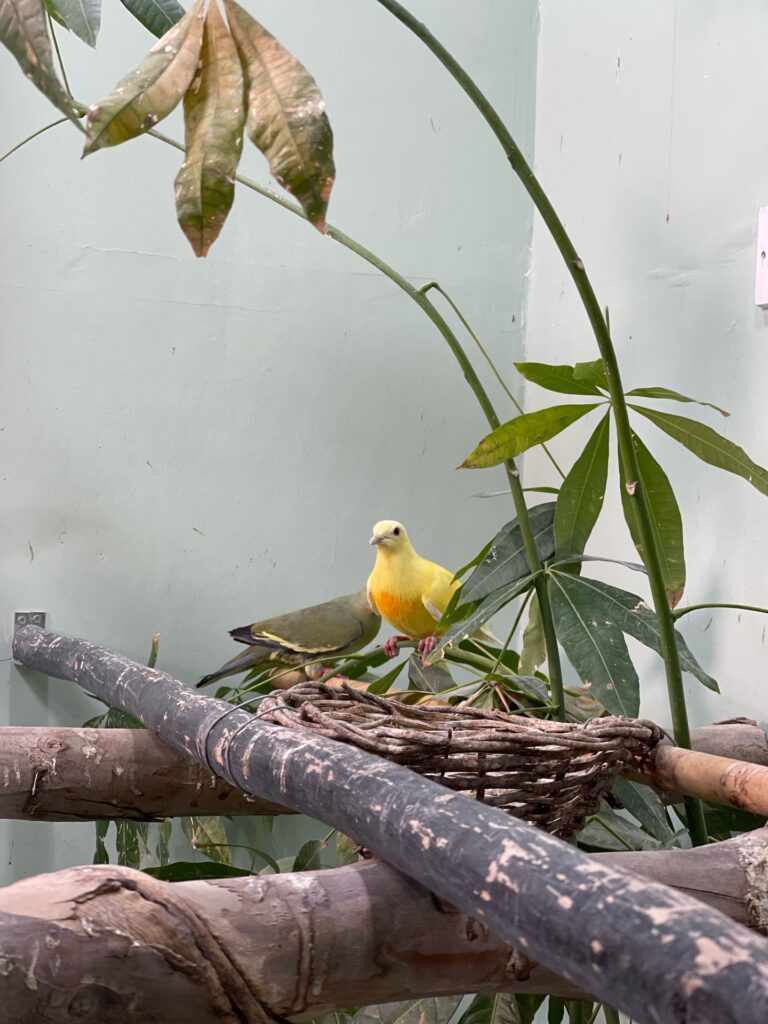
The Lutino male paired with a wild-type female at their nesting site at The Dodo Park.
The breakthrough was achieved by pairing the park’s prized Lutino male — a bird of unmatched visual brilliance — with a robust, wild-type green female.
Breeding frugivorous pigeons in captivity is notoriously difficult; they require highly specialized diets rich in specific fruits, vitamins, and minerals to maintain optimal breeding condition. Under the meticulous care of Nasser Bin Mohamed Al-Jbr and his technical team, the pair successfully nested, laid, and hatched a clutch of healthy, vigorous chicks.
From a genetic standpoint, this clutch is highly significant. Because the Lutino mutation in columbids is typically inherited as a sex-linked recessive trait, this successful pairing represents the crucial first step in establishing a stable, self-sustaining captive population of this spectacular mutation. The offspring will carry these rare genetics, paving the way for future generations of Lutino Pink-necked Green Pigeons.
THE VISION OF NASSER BIN MOHAMED AL-JBR AND THE DODO PARK
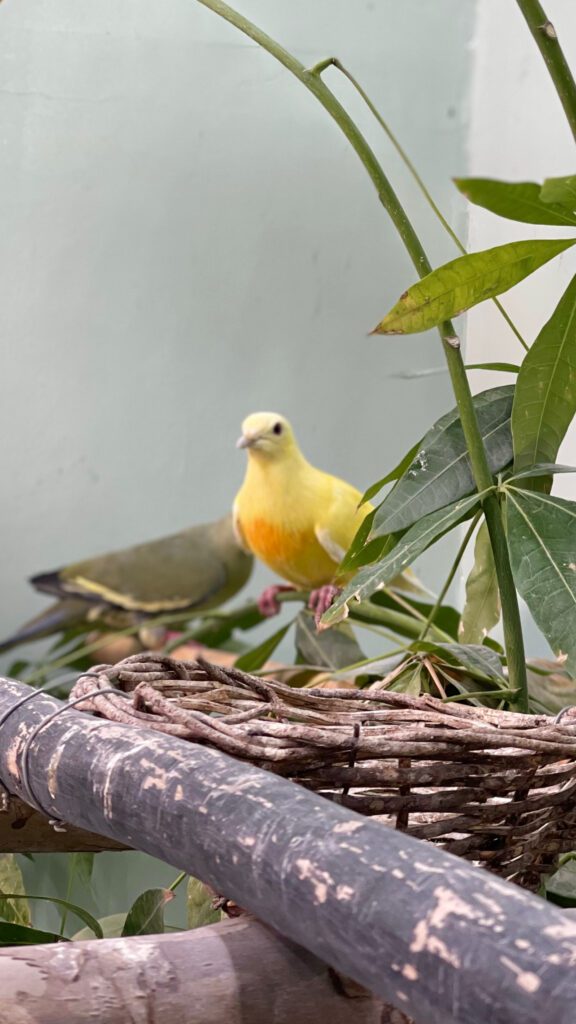
The exceptionally rare Lutino Pink-necked Green Pigeon male that forms the foundation of this groundbreaking breeding project.
For Nasser Bin Mohamed Al-Jbr, this success is the realization of a lifelong passion for avian conservation and genetics.
“This successful clutch is not merely a victory for our breeding facility; it is a significant scientific advancement,” Al-Jbr states. “It proves that with unwavering dedication, advanced specialized management, and world-class infrastructure, we can unlock the complex genetic mysteries of rare avian lineages and ensure their biological preservation.”
The Dodo Park is designed to be far more than a private collection. Spanning state-of-the-art breeding complexes, flight aviaries, and specialized care facilities, the center aims to lead global research in avian genetics and conservation. Notably, The Dodo Park has already engaged in high-profile international scientific collaborations — the center is a proud partner of the renowned US-based biotechnology and conservation organization Revive & Restore, actively collaborating on the historic Passenger Pigeon De-extinction Project.
By combining cutting-edge genomic tools with advanced husbandry techniques, Al-Jbr’s project is bridging the gap between historical aviculture and futuristic genetic rescue.
CONNECTING WITH THE PROJECT
As The Dodo Park nears its official grand opening in Doha, Nasser Bin Mohamed Al-Jbr is keen to share this journey with the global avicultural community, breeders, and scientists alike.
Aviculturists and readers of Avizandum can follow the daily progress, breeding updates, and stunning visual diaries of this breakthrough and other rare species directly through social media:
• Founder’s Personal Instagram: @nmaljbr
https://www.instagram.com/nmaljbr/
• The Dodo Park Project Instagram: @thedodopark
https://www.instagram.com/thedodopark/
• Media & Scientific Inquiries: thedodopark@gmail.com
Nasser Bin Mohamed Al-Jbr is fully available for exclusive interviews, Q&A sessions, or to provide further technical details and genetic data for future editions of Avizandum.


