

Brooding Temperature Control and Safety: Essential Guidelines for Raising Healthy Chicks
By Aramiya Naidoo
June 10, 2026
Successful brooding is one of the most critical stages in bird breeding. Even experienced breeders know that more chicks are lost due to temperature mistakes than almost any other management factor. The brooding period is when chicks are at their most vulnerable. Their bodies are not yet able to regulate temperature properly, their immune systems are still developing, and small environmental errors can quickly lead to stress, slow growth, or mortality.
Good brooding temperature control is not just about providing warmth. It is about stability, observation, safety, and understanding how young birds respond to their environment. When managed correctly, chicks grow evenly, feather properly, and develop into strong, resilient birds.
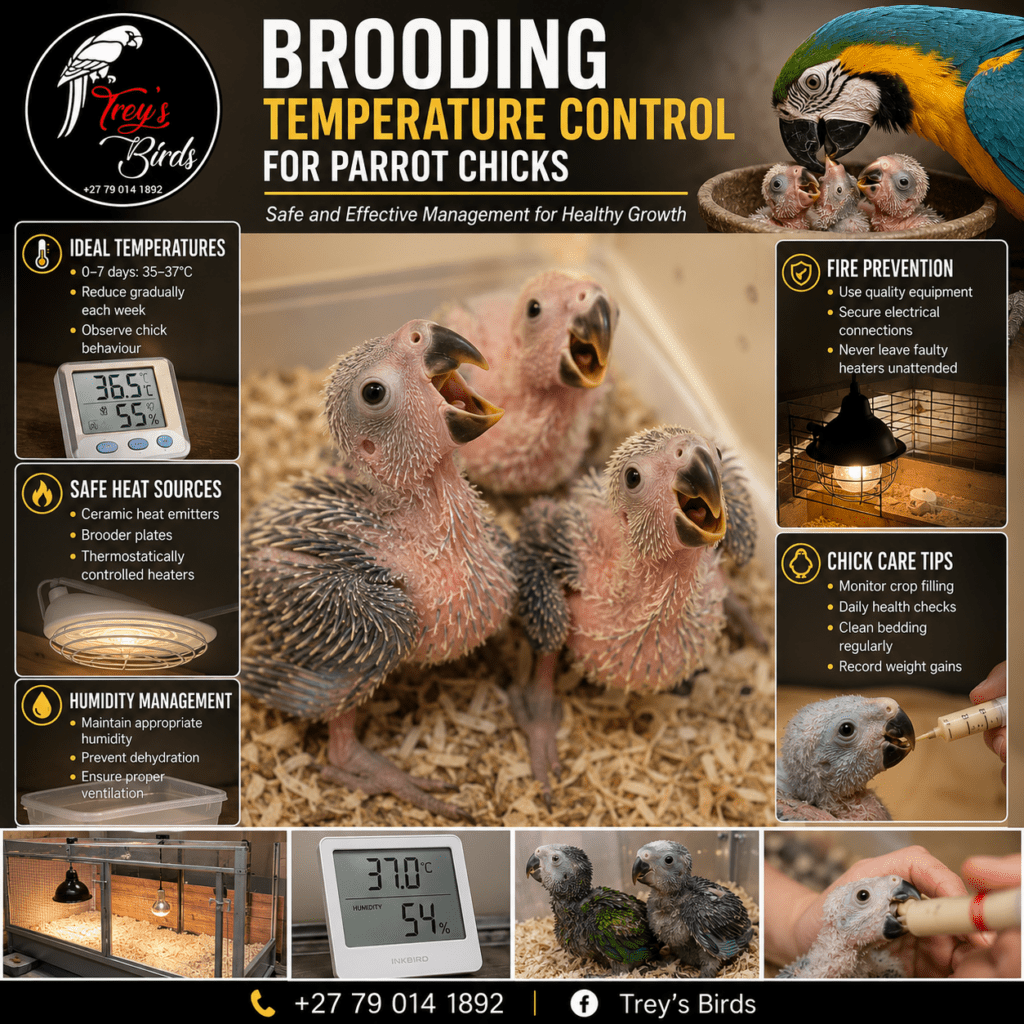
Why Brooding Temperature Control Matters
Newly hatched chicks cannot maintain their own body temperature effectively. In nature, parent birds provide warmth through brooding behaviour. In artificial or assisted breeding setups, breeders must replace this function with precision.
If chicks become too cold, several problems can occur. They may huddle tightly, become weak, stop feeding properly, and their digestion slows down. Prolonged chilling often leads to crop issues, poor growth, and increased susceptibility to infection.
Overheating can be just as dangerous. Chicks that are too hot may pant, spread their wings away from their bodies, become dehydrated, and in severe cases suffer sudden losses. Overheating is often underestimated because the brooder may feel comfortable to the breeder while being too warm for the chicks.
The goal is not simply heat. The goal is maintaining the correct temperature range that gradually decreases as chicks develop feathers and improve their own ability to regulate body temperature.
Recommended Brooder Temperature Guidelines
While exact requirements vary between species, the following general brooding temperature guide works well for many small to medium-sized aviary birds:
| Age | Recommended Temperature |
|---|---|
| Week 1 | 35–37°C at chick level |
| Week 2 | 32–34°C |
| Week 3 | 29–31°C |
| Week 4 | 26–28°C |
| Week 5 onwards | Gradual reduction based on feathering and ambient conditions |
These figures should be viewed as starting points rather than rigid rules. Observation of chick behaviour is always more important than relying solely on a thermometer.
Reading Chick Behaviour Correctly
Experienced breeders often say that chicks will tell you if the temperature is right. Learning to interpret their behaviour is one of the most valuable skills in brooding management.
Signs the Brooder Is Too Cold
- Chicks huddling tightly together
- Loud or persistent distress chirping
- Reduced movement
- Slow or poor feeding
- Chicks piling on top of one another
Signs the Brooder Is Too Hot
- Chicks spreading out far from the heat source
- Panting or open-beak breathing
- Wings held slightly away from the body
- Lethargy despite warm conditions
- Increased water intake in older chicks
Signs the Temperature Is Correct
- Chicks evenly spread throughout the brooder
- Quiet, content behaviour
- Regular feeding activity
- Normal growth and feather development
Daily observation, especially during the first two weeks, is essential. Temperature equipment supports you, but chick behaviour confirms the reality.
Choosing the Right Brooding Heat Source
Several heating options are commonly used in aviary breeding setups. Each has advantages and risks that breeders should understand.
Infrared Heat Lamps
Infrared heat lamps are widely used and effective when installed correctly. They provide strong radiant heat and are easy to adjust by changing their height. However, they carry a fire risk if poorly secured and can create dangerous hot spots if not monitored carefully.
Ceramic Heat Emitters
Ceramic heat emitters provide steady warmth without producing light. They are useful where constant lighting is undesirable but still require proper fixtures and safety precautions.
Heating Plates
Heating plates that mimic the warmth of a parent bird are becoming increasingly popular. These systems allow chicks to move in and out of the warm area naturally and often provide more even temperature control. They are generally safer but must still be correctly sized.
Room Heating Systems
Oil heaters or room heating systems can be useful in controlled indoor breeding rooms, although they are less precise for smaller brooder boxes.
Regardless of the system used, the principle remains the same: heat must be stable, evenly distributed, and safely installed.
Avoiding Dangerous Temperature Swings
One of the most common mistakes in brooding is temperature fluctuation. Chicks tolerate a slightly imperfect temperature far better than constant swings between hot and cold conditions.
Common causes of temperature instability include:
- Drafts from windows or doors
- Brooders placed near air conditioners
- Poor thermostat control
- Heat lamps positioned too high or too low
- Power interruptions
- Overcrowding within the brooder
A quality brooder setup should be located in a draft-free area with minimal environmental disturbance. In regions with unstable power supplies, backup power systems or contingency plans are strongly recommended.
Sudden nighttime temperature drops are particularly dangerous. Always check the brooder before lights-out and again early in the morning.
The Importance of Accurate Thermometers
Every brooder should have at least one reliable thermometer positioned at chick level, not at the top of the brooder. Heat rises, and many breeders mistakenly measure temperatures that do not accurately reflect what chicks are experiencing.
Digital thermometers with probes are especially useful. Having a second backup thermometer is good practice, particularly in larger breeding operations.
Thermometers should also be checked periodically for accuracy. Even a difference of a few degrees can significantly impact young chicks during the early brooding period.
Brooder Safety and Fire Prevention
Safety is often overlooked until something goes wrong. Any heating device introduces risk, particularly in environments containing bedding material, dust, and electrical equipment.
Important brooder safety practices include:
- Secure all heat lamps with both a primary fitting and a safety chain
- Use ceramic lamp holders rated for the correct wattage
- Keep flammable materials away from heat sources
- Avoid overloaded extension cords
- Keep wiring tidy and protected from rodents
- Ensure adequate ventilation without creating drafts
- Install smoke detectors where possible
Never assume that because a setup worked last season it remains safe today. Regular inspection is a vital part of responsible bird breeding.
Managing Humidity Alongside Temperature
Temperature does not work alone. Humidity plays an important role in chick health and development.
Very dry conditions can contribute to dehydration and poor feather development, while excessive humidity may encourage bacterial and fungal growth.
In most aviary situations, moderate ambient humidity is sufficient. However, extremely dry indoor environments may benefit from shallow water trays placed safely within the brooder area and away from contamination.
Good ventilation remains essential. Warm, stagnant air is never healthy for developing chicks.
Gradual Weaning from Heat
As chicks feather up and become stronger, supplemental heat should be reduced gradually. Removing heat too quickly can result in setbacks, particularly during cool evenings.
Signs that chicks are ready for reduced heat include:
- Good feather coverage
- Active movement
- No nighttime huddling
- Strong feeding behaviour
The reduction process should be gradual rather than abrupt. Many successful breeders reduce heat during the day first before removing it completely once nighttime comfort has been confirmed.
Record Keeping Improves Future Success
Serious breeders benefit greatly from maintaining simple brooding records. Record temperatures, chick numbers, growth rates, and any problems observed during the brooding period.
Over time, patterns become clear. Breeders learn how their specific setups perform in different seasons and conditions, leading to greater accuracy and improved outcomes.
Even basic notes can help prevent repeating mistakes in future breeding cycles.
Final Thoughts
Brooding temperature control is both a science and an art. Equipment provides the tools, but attentive observation and consistent management make the real difference.
The most successful breeders develop a daily routine of checking temperatures, observing chick behaviour, and ensuring all equipment is functioning safely. Small corrections made early often prevent major losses later.
By focusing on stability, safety, and careful monitoring, breeders provide their chicks with the best possible start in life. Strong brooding management lays the foundation for healthy growth, excellent feather quality, and ultimately successful breeding outcomes.
Disclaimer
The information shared in this Trey’s Birds Educational Series is for educational purposes only and does not replace professional advice, diagnosis, or treatment from a qualified South African veterinarian. Always consult a registered avian veterinarian for any medical concerns regarding your birds.
A Trey’s Birds Initiative – Promoting Ethical Aviculture & Education Across South Africa


