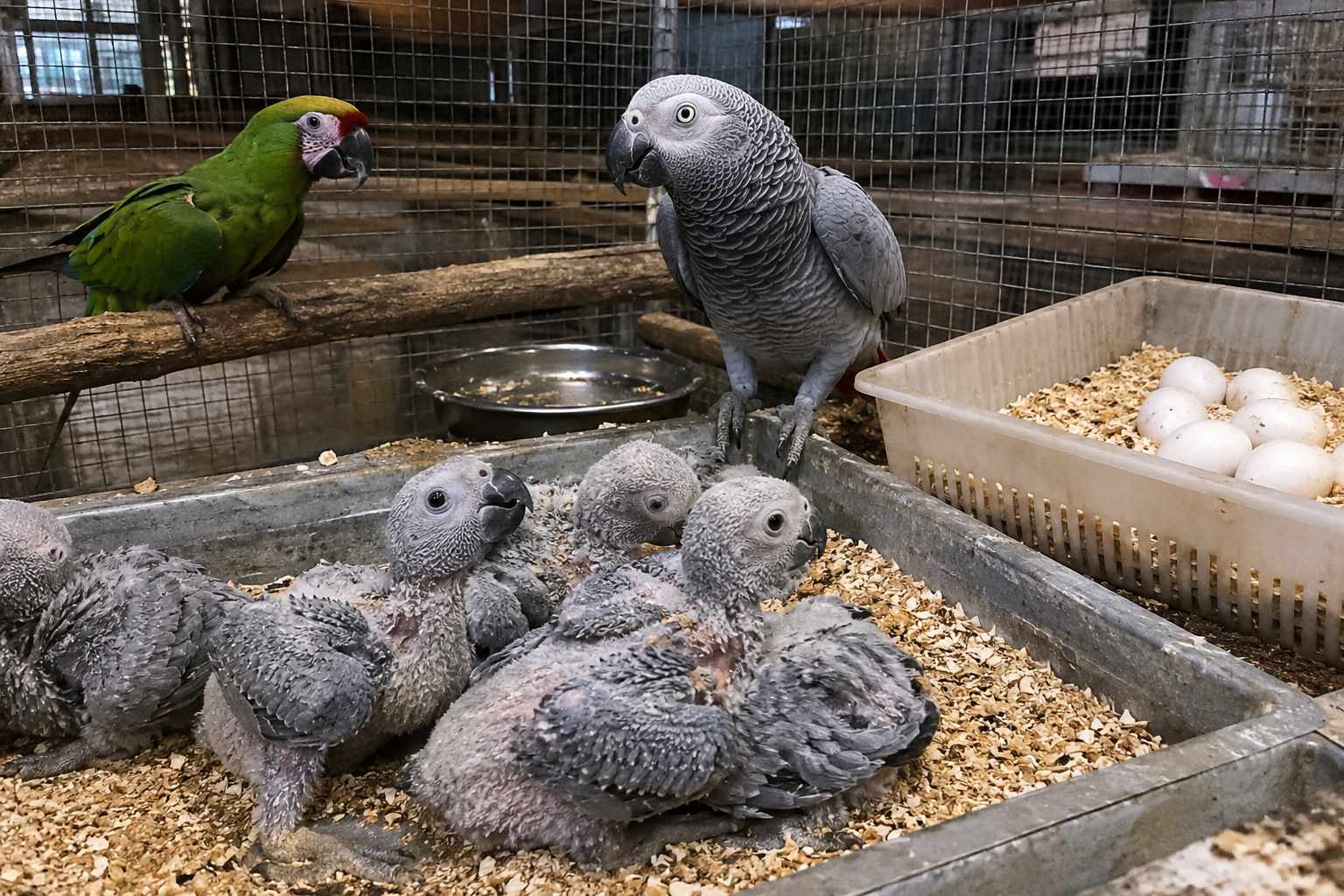
Is the Sale of Parrot Eggs Undermining the Future of the Bird Industry?
By
Avizandum
June 17, 2026
An Industry at a Crossroads
By Kobus van Niekerk
Paarlklip Aviculture & Exports
For more than 25 years, exports have been the heartbeat of the South African bird industry. They have created markets, supported prices, enabled breeders to expand their operations, and established South Africa as one of the world’s important suppliers of quality parrots.
Today, however, the industry faces a challenge that many people may still be underestimating.
As an exporter, I have experienced numerous challenges over the years. Wars that disrupt international markets, disease outbreaks such as Beak and Feather Disease, the impact of COVID-19, permit delays, clients who fail to pay, and increasing regulatory requirements. These are all risks that exporters live with on a daily basis.
The one thing that always remained constant, however, was the availability of birds.
Today, that is no longer the case.
The Big Question: Where Have the Birds Gone?
Many will argue that it is simply a poor breeding season. Others will point to nest mortalities, changing weather patterns, or breeding pairs that are not performing optimally.
There is truth in all of these arguments.
Yet even breeders with established, well-managed breeding programs are noticing the same trend: there are simply fewer young birds available for the market.
The question we need to ask is why.
One possible answer lies in the growing trade in parrot eggs.
The Unintended Consequences of Egg Sales
Selling eggs offers a quick financial return. An egg is sold long before the costs of rearing, feeding, hand-raising, housing, and health management are incurred.
For many breeders, this appears to be an attractive alternative.
The problem arises when large numbers of eggs leave breeding facilities before they ever develop into young birds.
Every egg that is sold potentially represents one fewer young bird entering the market through the permit systems and regulatory structures designed to protect and regulate our bird industry.
When this practice occurs on a large scale, the consequences begin to ripple throughout the entire value chain.
International Clients Are Looking Elsewhere
International buyers are loyal, but they require a consistent supply.
If they cannot obtain the birds they need, they will inevitably begin sourcing them elsewhere.
This is already happening.
There was a time when exporters could easily supply 100 African Grey Parrots to a single client. Today, many struggle to assemble even 40 birds for that same customer.
For most international buyers, African Greys are the key species that open the door to further purchases of other parrot species. When Greys are unavailable, South Africa loses not only those sales but often the opportunity to market additional species as part of a broader package.
What Happens If the Egg Market Suddenly Stops?
A question few people ask is what happens if demand for eggs suddenly declines or disappears altogether.
What happens if import regulations change?
What happens if markets close?
What happens if international authorities impose stricter oversight?
Bird breeding operations that have structured their income primarily around egg sales could face significant challenges under such circumstances.
Even more important is the potential long-term biological impact.
When breeding pairs are continuously stimulated to produce more eggs and eggs are repeatedly removed, questions arise about the long-term effects on natural breeding behaviour, parental instincts, and the sustainability of breeding programs.
While further research is needed, these risks should not be ignored.
The Value of Breeding Operations Is at Stake
Many established breeding facilities have been built over decades.
The value of these operations lies not only in their infrastructure but also in their genetics, proven breeding pairs, and their ability to consistently produce quality young birds year after year.
If the availability of young birds continues to decline, it affects the economic value of the entire industry.
This impacts breeders, exporters, pet shops, feed manufacturers, equipment suppliers, and ultimately the long-term sustainability of aviculture in South Africa.
Time for a Serious Conversation
This article is not an attack on any individual or business.
Rather, it is an invitation to discussion.
The bird industry is facing important decisions that may shape the next decade. We must ask ourselves whether short-term profit is always the best long-term strategy.
If we fail to consider the bigger picture, we may one day look back and realise that, without intending to, we weakened the very foundation of our own industry.
For more than two decades, exports have helped drive the growth of the South African bird industry. The question now is whether we are prepared to have the necessary conversations to ensure that it can continue to thrive for the next 25 years.
The challenge is not simply to sell more eggs or produce more birds. The challenge is to build an industry that remains economically sustainable, genetically healthy, and internationally competitive for the next generation of bird breeders.